
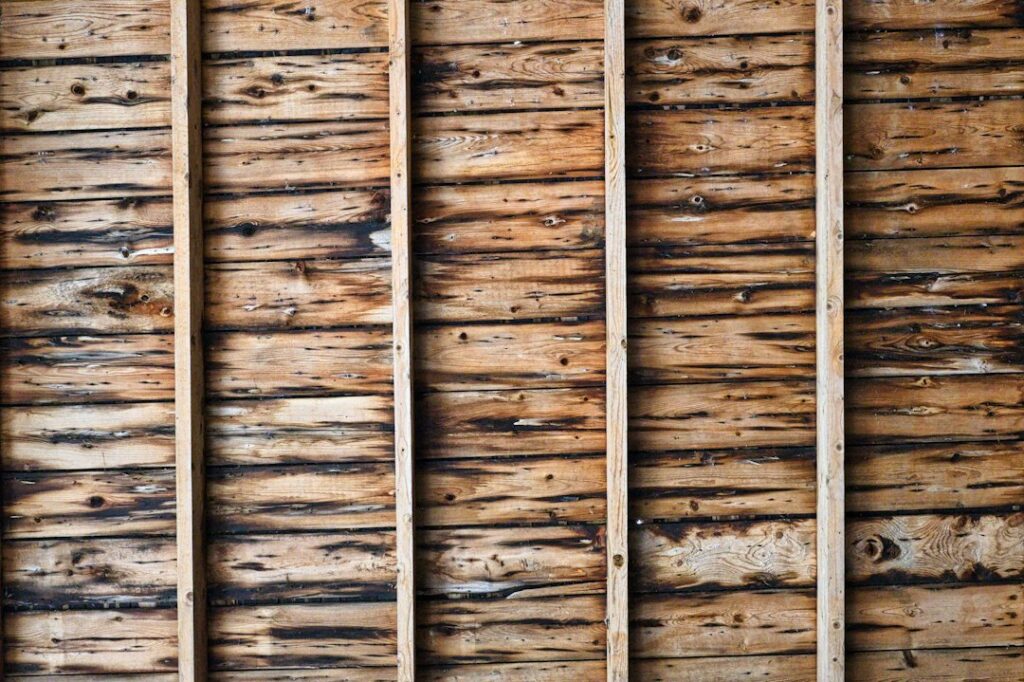
Roof decking is the layer of plywood or oriented strand board beneath the shingles and underlayment. It helps distribute the roof’s weight, supports the roofing materials, and connects the roof covering to the framing below. When decking becomes soft, warped, split, or weakened by moisture, the problem can affect more than the shingles.
For homeowners in Castleton On Hudson, seasonal snow, rain, ice, wind, and freeze-thaw cycles can expose existing weaknesses in a roof assembly. Some signs are visible indoors, while others only appear during a roof inspection or replacement.
What does damaged roof decking look like from inside the house?
The most common indoor clues are water stains, sagging ceiling areas, and damp or musty odors. These signs do not always identify the exact location of the roof deck damage because water can travel along rafters, insulation, or ceiling materials before appearing inside.
Look in the attic for:
- Dark stains or water marks on plywood or OSB
- Soft, crumbly, or swollen wood
- Mold-like spotting or a persistent musty smell
- Rusted nails or metal fasteners
- Damp insulation beneath roof valleys, vents, chimneys, or flashing
- Daylight visible through unexpected gaps in the roof surface
A stain that appears only after heavy rain or snowmelt may point to an active leak. A stain that remains dry may be older, but it still deserves attention if the underlying wood has not been examined.
Can a sagging roof indicate bad decking?
Yes. A sagging area may indicate weakened decking, damaged rafters, excessive moisture, or a combination of structural problems. Even a shallow dip should not be dismissed as a cosmetic issue.
From the ground, a roof may appear uneven along a slope, ridge, valley, or eave. From inside the attic, the underside of the decking may bow between rafters or look wavy instead of flat. Water-damaged wood can lose its ability to hold fasteners, which may allow the roof surface to shift or sag further.
A visibly sagging roof is a safety concern, particularly after heavy snow or prolonged rain. Avoid walking on or directly beneath a severely weakened area until the condition has been evaluated. If the roof appears to be separating, collapsing, or carrying unusual loads, keep people away from the area.
What exterior signs suggest the roof deck is deteriorating?
Shingles are installed over the decking, so exterior evidence can be subtle. Several irregularities may suggest movement or weakness below the roof covering:
- A dip or wave in an otherwise straight roof plane
- Shingles that appear uneven, lumpy, or repeatedly lifted
- Nail pops that return after being repaired
- Loose roof edges or areas where shingles do not lie flat
- Visible wood at the eaves that looks dark, swollen, split, or rotted
- Gutter debris containing small wood fragments or deteriorated roofing material
These signs do not prove that the decking is damaged. Shingle aging, poor ventilation, installation problems, and damaged flashing can create similar symptoms. The key question is whether the roof deck remains dry, flat, and strong enough to hold the roofing system securely.
Why are roof valleys and penetrations common trouble spots?
Roof valleys, chimneys, plumbing vents, skylights, and other penetrations are more likely to develop leaks because they interrupt the normal flow of water across the roof. If flashing or underlayment fails, moisture can reach the decking and remain trapped beneath the shingles.
A leak around a vent or chimney may not appear directly below that feature inside the house. Water can move along the roof sheathing or framing before entering a ceiling. Repeated staining in one area, especially after wind-driven rain, should be investigated rather than covered with fresh paint.
Snow and ice can add stress to these vulnerable locations. During winter thaws, melting snow may encounter frozen roof edges or blocked drainage paths. The resulting water can work beneath roofing materials and reach the decking.
Does a small roof leak always require deck replacement?

No. A small leak does not automatically mean that the entire roof deck must be replaced. If the decking is dry, solid, and still holds fasteners properly, correcting the leak may be enough.
Replacement is more likely when the wood is:
- Soft when lightly tested by a qualified inspector
- Swollen, delaminated, or visibly deteriorated
- Darkened by long-term moisture exposure
- Split around fasteners
- Unable to support nails or other fasteners
- Sagging between framing members
Limited damage may involve only a few panels or sections. More extensive moisture intrusion can affect insulation, rafters, ceiling materials, and interior finishes. The visible leak may therefore be smaller than the total area requiring repair.
How can homeowners check the roof deck safely?
A ground-level inspection can identify obvious changes without creating a fall hazard. Look at the roof from several angles after rain, wind, or snowmelt. Binoculars can help reveal lifted shingles, uneven planes, exposed wood, or displaced flashing.
An attic inspection is useful if the space is safely accessible. Wear a respirator when dust, mold, or animal waste may be present, and step only on framing members or a properly installed attic floor. Never step directly on the ceiling surface between rafters.
Avoid climbing onto the roof when it is wet, icy, snow-covered, steep, or visibly sagging. Roof decking can be weaker than it appears, and damage may not be visible from above. Safety becomes especially important during winter and early spring, when surfaces may freeze and thaw repeatedly.
Could poor attic ventilation damage roof decking?
Yes. Roof decking can be affected by moisture from both outside leaks and inside the house. Warm, humid air that enters the attic can condense on cold roof sheathing during winter. Over time, repeated condensation may contribute to staining, mold growth, fastener corrosion, and wood deterioration.
Warning signs of a ventilation or air-sealing problem include frost on the underside of the roof, widespread dark staining rather than one localized leak, damp insulation, and moisture concentrated near bathroom exhaust ducts or other penetrations.
Bathroom and kitchen exhaust should discharge outdoors through properly sealed ducts, not into the attic. Gaps around ceiling fixtures, attic hatches, and wiring penetrations can also allow indoor moisture to enter the roof assembly.
When does roof decking damage require prompt attention?
Prompt evaluation is sensible when there is active dripping, a growing ceiling stain, visible sagging, exposed wiring near water, widespread mold, or a roof surface that changes after a storm. These conditions may worsen during the next rain, snow event, or freeze-thaw cycle.
A roof deck is part of the home’s structure, not merely a backing material for shingles. Finding the source of moisture and determining whether the wood remains sound can prevent a minor leak from becoming a broader structural and interior repair problem.
